Apple Worm Route Planning: Work Backward from the Portal
5/14/2026
Many failed attempts succeed at the first objective and fail at the second: the worm collects the apple, but its new position cannot reach the portal. Planning backward makes the exit part of the route from the beginning instead of a problem discovered at the end.
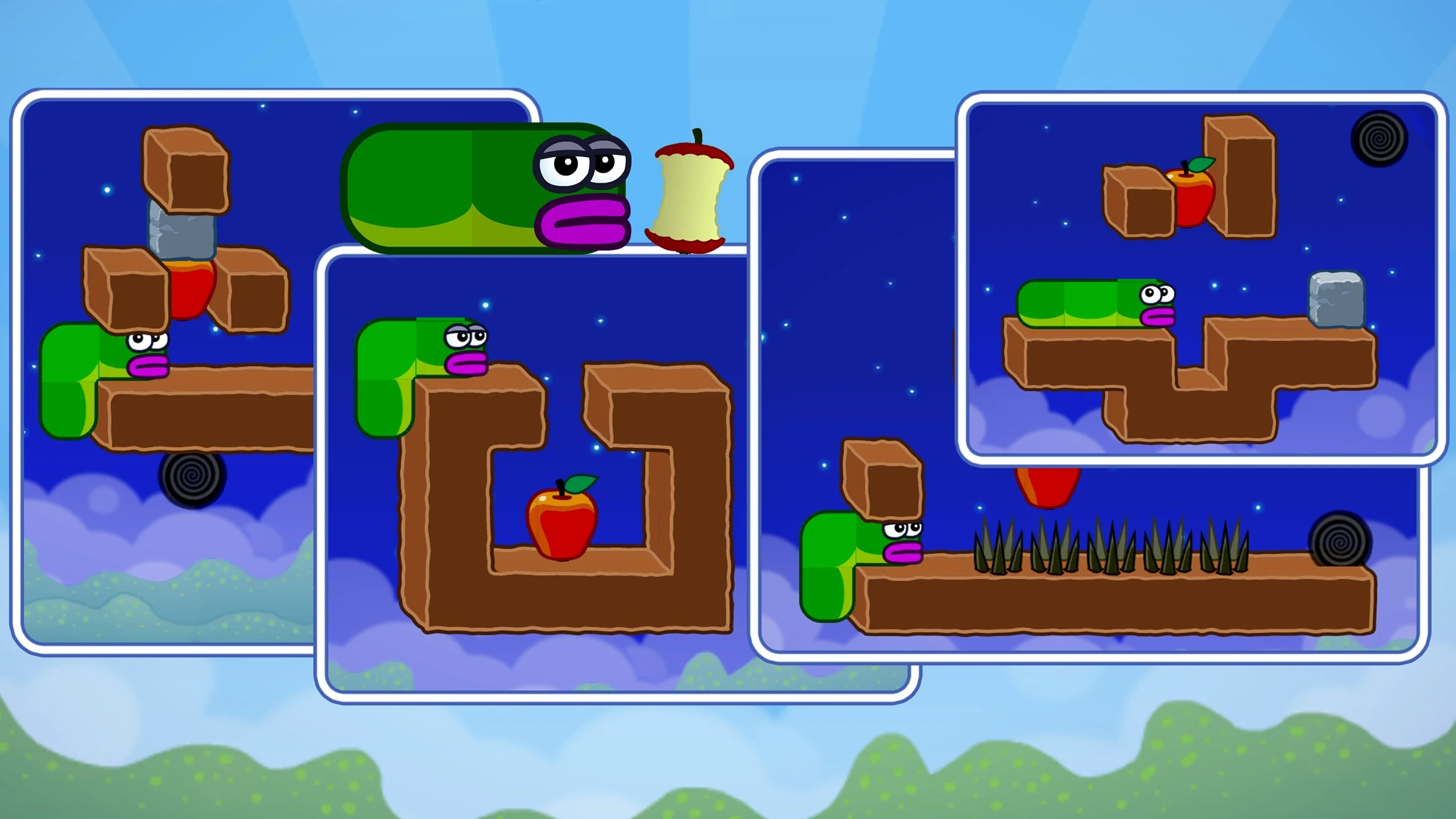
A route should account for the layout and the worm's body position across the whole board.
Define the last move
Start beside the portal and ask what the final move must look like. Which side does the head enter from? Which direction does it face? Where is the body immediately behind it? Then identify the cell the head must occupy one move earlier and the free cell needed to make that turn.
This is a small target state: not just "reach the portal," but "arrive from this side with the body clear of the turn." If that shape cannot be reached after collecting the apple, the apple approach needs to change.
Trace backward to the apple
Work backward through the constrained part first. Mark the final turn, the narrowest passage, and any cell that the route needs more than once. Only then choose a way to the apple. When both halves use the same corridor, decide which pass happens first and what must be true before the second pass begins.
For a generic example, imagine the apple beyond a one-cell entrance while the portal is on the starting side. A direct trip may leave the tail in the entrance when the head needs to return. The plan therefore needs a safe stretch of movement that lets the tail clear before the return. If the board provides no room for that, the worm must approach the apple from a different direction or use the passage at a different point in the sequence.
Mark the cells that must stay open
Usually the whole board does not need to be memorized. Mark only the cells that control the solution:
- The cell used for the final portal turn.
- The shared passage the tail must clear.
- The cell where the worm changes direction after the apple.
- Any tile whose behavior is not yet confirmed.
Treat these as constraints. A candidate move is safe only if it does not occupy a required cell too early or remove the only way to clear it later.
Use three checkpoints
For longer levels, compare your attempt at three moments: before the last apple, immediately after collection, and before the final portal approach. Record the head direction and the body's position at each checkpoint. If the first two match but the final one does not, focus on the route between those points rather than restarting your entire plan mentally.
Verify, then refine
Try the plan at a manageable pace. If it fails, identify the first constraint you violated: blocked turn, uncleared passage, or wrong portal angle. Use the matching page in the Apple Worm level guides to compare that point with the recorded solution. Once you have a route that works, the advanced route optimization guide explains how to shorten it without losing the body position that makes it possible.